

Open prompts
sample 07 AI Image Prompt
sample 07, its complete AI image prompt, and the Good Morning & Daily Greetings · Good Morning · Line Art · 178 style are free to view and copy.
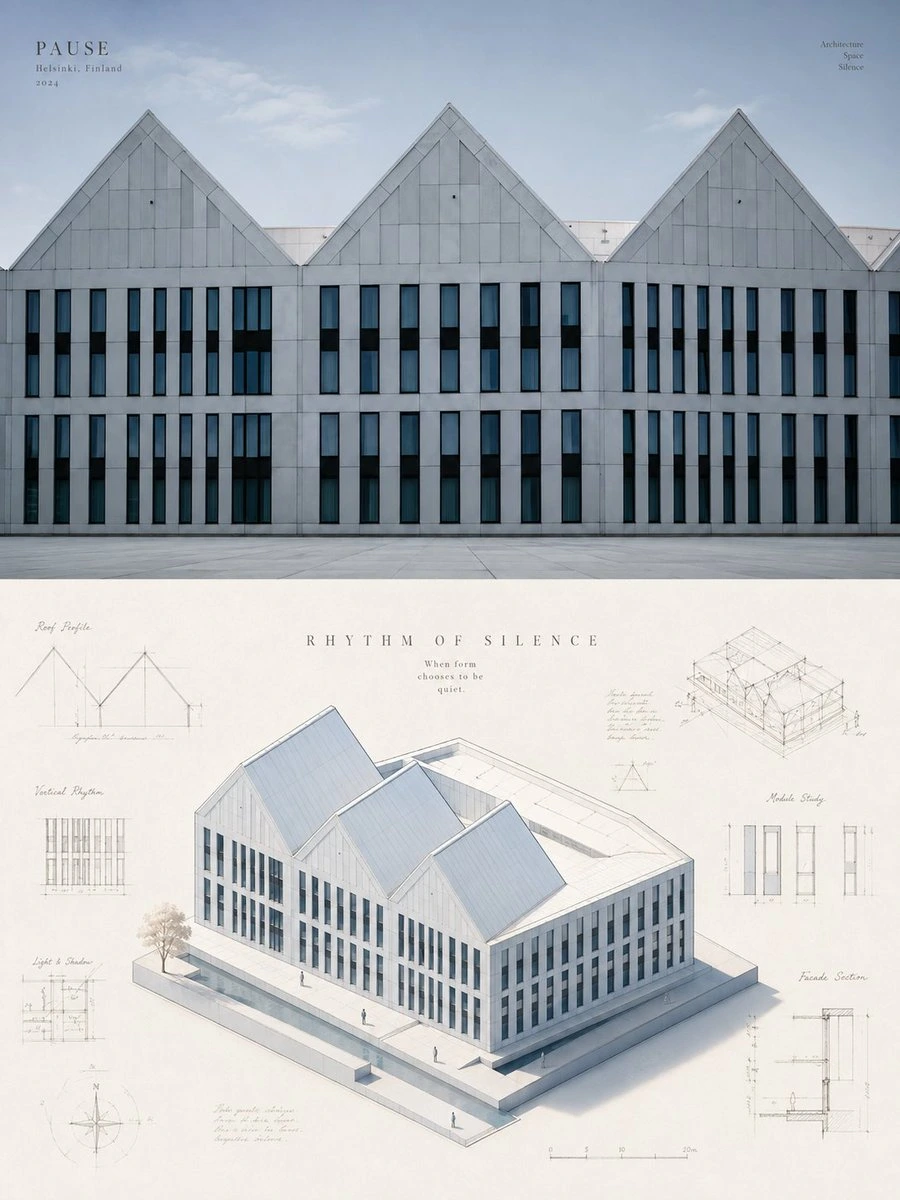
Complete AI image prompt
Build a two-stage encounter in which one theme moves from lived reality into an imaginative paper reconstruction. Establish the evidence first through immersive location photography: the theme-bearing subject remains immediately recognizable within a believable time, place, weather, depth structure, material setting, and directional natural light. Let this photographic world give way to a generous warm-white paper field where the same key form is extracted from its surroundings, enlarged into the overwhelming visual anchor, and preserved with photographic contour, tactile detail, and its most identifying color, yet reinterpreted by the theme as a miniature world that can be entered, climbed, surveyed, operated, or taken apart. Govern the composition by a strong staged correspondence and a steep dominant-to-subordinate scale jump: reality carries atmosphere and proof, reconstruction carries concept and play; the enlarged form holds most of the lower visual weight while broad breathing room isolates it, and a few fine contours, leaders, and diagonal connectors guide a looping, wandering reading path. Populate its edge and surface with tiny black hand-drawn figures and theme-derived props, using round heads, single-line limbs, lightly irregular pen pressure, and economical expressive poses to create an extreme scale contrast. Every figure must perform a meaningful interaction supplied by the subject's function or symbolism—climbing, carrying, observing, resting, measuring, playing—while ladders, ropes, nets, guide lines, and partial contours connect the scattered incidents into one airy narrative. Allow two bounded modes within this same language: intimate everyday material favors sparse doodles, brief handwritten remarks, and playful micro-scenes; structural material turns the subject into a refined isometric model surrounded by pale graphite-like elevations, sections, dimensions, coordinates, legends, and compact data notes. Both modes retain abundant white space and the same delicate linear discipline. Lettering serves rhythm and hierarchy rather than becoming the subject: use the writing system appropriate to the theme, pairing a few handwritten phrases or a high-contrast serif display with widely tracked small information text, pronounced size jumps, and light placement along margins, empty intervals, or annotation lines; derive all wording from the theme's location, condition, feeling, and structural facts. Extract the palette from the photographed scene: paper white dominates, black and soft gray supply the framework, and one or two theme-specific hues remain concentrated in the focal form. The real scene may carry morning gold, restrained rainy tones, or lucid cool light, while the reconstruction suppresses environmental color so the chosen accent travels consistently through photography, realistic cutout, and low-opacity diagrams. Keep natural reflections, shallow depth transitions, and credible contact shadows in the photograph; unify the paper world with an even surface, crisp hairline drawing, soft grounded shadows, and edges that gently dissolve into white, balancing macro-scale realism, miniature humor, and editorial precision.
Original style prompt
Build a two-stage encounter in which one theme moves from lived reality into an imaginative paper reconstruction. Establish the evidence first through immersive location photography: the theme-bearing subject remains immediately recognizable within a believable time, place, weather, depth structure, material setting, and directional natural light. Let this photographic world give way to a generous warm-white paper field where the same key form is extracted from its surroundings, enlarged into the overwhelming visual anchor, and preserved with photographic contour, tactile detail, and its most identifying color, yet reinterpreted by the theme as a miniature world that can be entered, climbed, surveyed, operated, or taken apart. Govern the composition by a strong staged correspondence and a steep dominant-to-subordinate scale jump: reality carries atmosphere and proof, reconstruction carries concept and play; the enlarged form holds most of the lower visual weight while broad breathing room isolates it, and a few fine contours, leaders, and diagonal connectors guide a looping, wandering reading path. Populate its edge and surface with tiny black hand-drawn figures and theme-derived props, using round heads, single-line limbs, lightly irregular pen pressure, and economical expressive poses to create an extreme scale contrast. Every figure must perform a meaningful interaction supplied by the subject's function or symbolism—climbing, carrying, observing, resting, measuring, playing—while ladders, ropes, nets, guide lines, and partial contours connect the scattered incidents into one airy narrative. Allow two bounded modes within this same language: intimate everyday material favors sparse doodles, brief handwritten remarks, and playful micro-scenes; structural material turns the subject into a refined isometric model surrounded by pale graphite-like elevations, sections, dimensions, coordinates, legends, and compact data notes. Both modes retain abundant white space and the same delicate linear discipline. Lettering serves rhythm and hierarchy rather than becoming the subject: use the writing system appropriate to the theme, pairing a few handwritten phrases or a high-contrast serif display with widely tracked small information text, pronounced size jumps, and light placement along margins, empty intervals, or annotation lines; derive all wording from the theme's location, condition, feeling, and structural facts. Extract the palette from the photographed scene: paper white dominates, black and soft gray supply the framework, and one or two theme-specific hues remain concentrated in the focal form. The real scene may carry morning gold, restrained rainy tones, or lucid cool light, while the reconstruction suppresses environmental color so the chosen accent travels consistently through photography, realistic cutout, and low-opacity diagrams. Keep natural reflections, shallow depth transitions, and credible contact shadows in the photograph; unify the paper world with an even surface, crisp hairline drawing, soft grounded shadows, and edges that gently dissolve into white, balancing macro-scale realism, miniature humor, and editorial precision.
More open images in the “Good Morning & Daily Greetings · Good Morning · Line Art · 178” style