

Open prompts
sample 07 AI Image Prompt
sample 07, its complete AI image prompt, and the Solar Terms & Festivals · Solar Terms · Miniature · 062 style are free to view and copy.
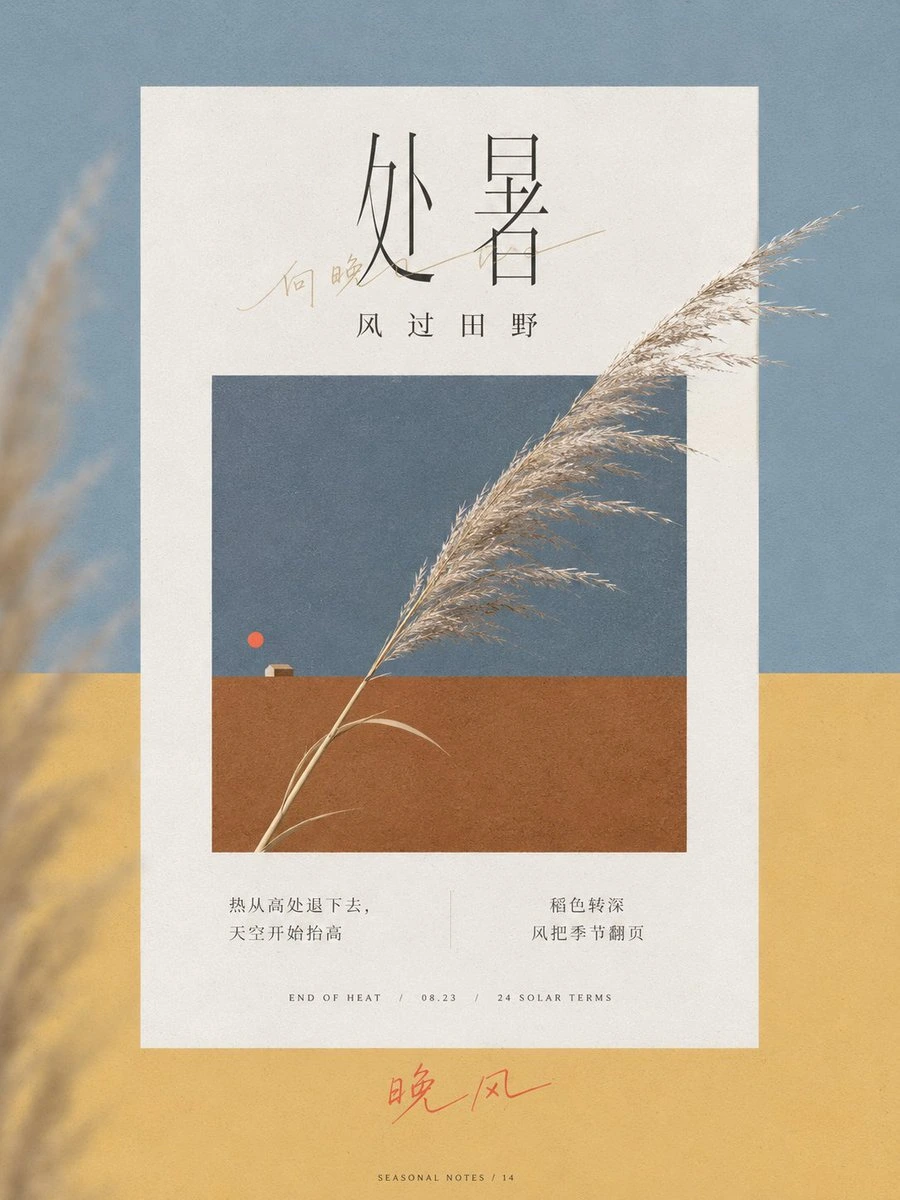
Complete AI image prompt
Build the first read around one theme-derived carrier at a scale far beyond every supporting element, entering from beyond the field on a diagonal or sweeping curve, crossing an inner frame, broad color boundary, or reserve of open space, then continuing off-field. Keep its structure unmistakably real and let this single restrained breach turn a quiet editorial order into the main directional event. Govern the space through three sharply separated weights: a dominant expanse of breathing room, a subordinate frame-within-frame or deep tonal window, and a sparse layer of minute information; the carrier should outweigh type and symbols by roughly four to one. Balance its asymmetric pull from a distance with one tiny circle, a hairline rule, a miniature diagram, or a small environmental trace, so the eye enters through the display title, follows the growth or sweep of the carrier, and comes to rest on peripheral data. Derive the carrier, symbolic attachments, narrative traces, material logic, and hues from the subject itself; reduce the subject to one tangible object, organic form, or plausible constructed artifact while preserving the semantically decisive tactile cues, such as translucency, moisture, fibers, veins, or controlled specular response. Use only a few attachments as echoes of rhythm and scale, never as competing centers. Construct the ground from generous pale air, two or three broad low-contrast chromatic fields, and one darker inset plane. Let the subject family provide the dominant hue, temper it with adjacent cool-warm support colors, and reserve a single highly saturated warm dot as the optical marker. Keep field boundaries calm and planar; when the carrier crosses them, its contour should shift through clear light-dark figure-ground contrast. Select one bounded surface temperature to match the subject: either a luminous high-key atmospheric treatment with diffuse daylight, thin haze, soft cast shadows, and localized crystalline highlights, or a quiet matte-paper treatment with even cotton stock, flat absorbed ink fields, and finely resolved natural material detail; in both treatments, the inset frame and information zones remain level, legible, and optically composed. Set the main title in a valid, recognizable display construction native to the target writing system, with tall proportions, strong thick-thin modulation, taut verticals, fine cross-strokes, sharp terminals, and an airy rhythm. Thread a light handwritten stroke or brief phrase across part of the title like a wind trace while preserving orthographic recognition. Recede all supporting copy into small sizes, open tracking, and a strict baseline rhythm, arranged as compact columns, numbering, calibrated ticks, dividers, and minimal linear icons within limited information islands. Make typography, fields, frame, symbols, and tangible subject obey the same crossing vector, leaving the remaining space quiet and expansive so any theme reads as a refined, time-sensitive editorial narrative of gradual change.
Original style prompt
Build the first read around one theme-derived carrier at a scale far beyond every supporting element, entering from beyond the field on a diagonal or sweeping curve, crossing an inner frame, broad color boundary, or reserve of open space, then continuing off-field. Keep its structure unmistakably real and let this single restrained breach turn a quiet editorial order into the main directional event. Govern the space through three sharply separated weights: a dominant expanse of breathing room, a subordinate frame-within-frame or deep tonal window, and a sparse layer of minute information; the carrier should outweigh type and symbols by roughly four to one. Balance its asymmetric pull from a distance with one tiny circle, a hairline rule, a miniature diagram, or a small environmental trace, so the eye enters through the display title, follows the growth or sweep of the carrier, and comes to rest on peripheral data. Derive the carrier, symbolic attachments, narrative traces, material logic, and hues from the subject itself; reduce the subject to one tangible object, organic form, or plausible constructed artifact while preserving the semantically decisive tactile cues, such as translucency, moisture, fibers, veins, or controlled specular response. Use only a few attachments as echoes of rhythm and scale, never as competing centers. Construct the ground from generous pale air, two or three broad low-contrast chromatic fields, and one darker inset plane. Let the subject family provide the dominant hue, temper it with adjacent cool-warm support colors, and reserve a single highly saturated warm dot as the optical marker. Keep field boundaries calm and planar; when the carrier crosses them, its contour should shift through clear light-dark figure-ground contrast. Select one bounded surface temperature to match the subject: either a luminous high-key atmospheric treatment with diffuse daylight, thin haze, soft cast shadows, and localized crystalline highlights, or a quiet matte-paper treatment with even cotton stock, flat absorbed ink fields, and finely resolved natural material detail; in both treatments, the inset frame and information zones remain level, legible, and optically composed. Set the main title in a valid, recognizable display construction native to the target writing system, with tall proportions, strong thick-thin modulation, taut verticals, fine cross-strokes, sharp terminals, and an airy rhythm. Thread a light handwritten stroke or brief phrase across part of the title like a wind trace while preserving orthographic recognition. Recede all supporting copy into small sizes, open tracking, and a strict baseline rhythm, arranged as compact columns, numbering, calibrated ticks, dividers, and minimal linear icons within limited information islands. Make typography, fields, frame, symbols, and tangible subject obey the same crossing vector, leaving the remaining space quiet and expansive so any theme reads as a refined, time-sensitive editorial narrative of gradual change.
More open images in the “Solar Terms & Festivals · Solar Terms · Miniature · 062” style