

Open prompts
sample 08 AI Image Prompt
sample 08, its complete AI image prompt, and the Infographics & Visual Guides · Watercolor · Oil Painting · 136 style are free to view and copy.
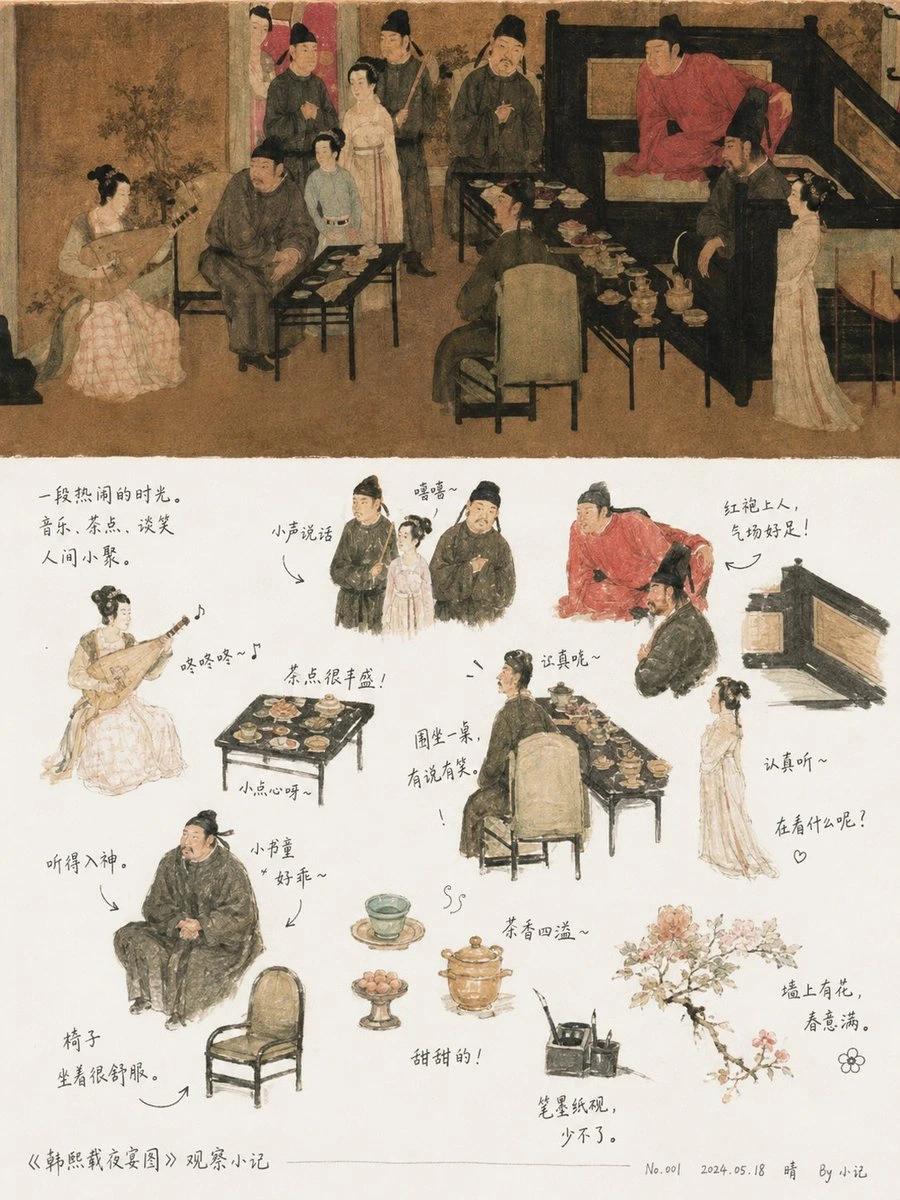
Complete AI image prompt
Build a two-register translation of the same theme. Give the first register most of the visual weight through a complete, credible, detail-rich literal image that establishes the narrative setting, relationships among figures or objects, and convincing light and color. Across a clean dividing seam, reinterpret that evidence on a generous warm-white paper field as a quieter, intimate hand-drawn memory. The eye should read the literal image first, then cross the seam and discover correspondences in silhouette, gesture, color masses, and symbolic details; the drawn register must close the recognition loop while leaving ample breathing room. Let the theme determine the main form, decisive action, environmental cues, attached symbols, palette sources, and information hierarchy. Reduce complex perspective, materials, and scenery to stable outer contours, a few flat shapes, and rhythmic fine lines, retaining only the features essential to identity and feeling. Keep the lower interpretation within a controlled range of densities: a small distilled vignette of the central event, a complete scene reorganized inside a simple painted frame, or an airy observation sheet that separates the subject, props, and gesture fragments. In every mode, maintain one unmistakable dominant form, cluster supporting marks by proximity, and give open paper more area than explanatory fragments. Construct the illustration primarily with opaque acrylic- and gouache-like flat fills, then use pencil, crayon, or fine ink lines for faces, folds, structure, and restrained cast shadows. Simplify forms and allow gently exaggerated proportions; keep slight hand-drawn undulation along peripheral contours and localized dry-brush skips where pigment catches the raised paper tooth, while faces, lettering, and identity-bearing edges remain sharply legible. Derive the palette from the literal register: one broad, muted ground color organizes the space, one or two subject colors preserve correspondence, and a very small high-chroma warm or cool accent marks the focal point. Compress value range and detail in the drawn register while preserving the upper register’s decisive color relationship. When text is useful, limit it to theme-derived short titles, dates, or handwritten annotations that act as indexing marks and pauses. Use slender, naturally uneven handwriting or lightly tracked small serif lettering, subordinate to the image, with occasional arrows, short rules, and tiny symbols linking details; valid glyph anatomy and readable spacing must follow the chosen writing system. The finished image should feel like a tender comparison between full visual evidence and selective explanation: narratively complete above, interpretive below, with a matte paper surface, even opaque paint, concentrated detail at recognition points, calm color fields, and disciplined empty space creating a restrained, handmade, precise authorial voice.
Original style prompt
Build a two-register translation of the same theme. Give the first register most of the visual weight through a complete, credible, detail-rich literal image that establishes the narrative setting, relationships among figures or objects, and convincing light and color. Across a clean dividing seam, reinterpret that evidence on a generous warm-white paper field as a quieter, intimate hand-drawn memory. The eye should read the literal image first, then cross the seam and discover correspondences in silhouette, gesture, color masses, and symbolic details; the drawn register must close the recognition loop while leaving ample breathing room. Let the theme determine the main form, decisive action, environmental cues, attached symbols, palette sources, and information hierarchy. Reduce complex perspective, materials, and scenery to stable outer contours, a few flat shapes, and rhythmic fine lines, retaining only the features essential to identity and feeling. Keep the lower interpretation within a controlled range of densities: a small distilled vignette of the central event, a complete scene reorganized inside a simple painted frame, or an airy observation sheet that separates the subject, props, and gesture fragments. In every mode, maintain one unmistakable dominant form, cluster supporting marks by proximity, and give open paper more area than explanatory fragments. Construct the illustration primarily with opaque acrylic- and gouache-like flat fills, then use pencil, crayon, or fine ink lines for faces, folds, structure, and restrained cast shadows. Simplify forms and allow gently exaggerated proportions; keep slight hand-drawn undulation along peripheral contours and localized dry-brush skips where pigment catches the raised paper tooth, while faces, lettering, and identity-bearing edges remain sharply legible. Derive the palette from the literal register: one broad, muted ground color organizes the space, one or two subject colors preserve correspondence, and a very small high-chroma warm or cool accent marks the focal point. Compress value range and detail in the drawn register while preserving the upper register’s decisive color relationship. When text is useful, limit it to theme-derived short titles, dates, or handwritten annotations that act as indexing marks and pauses. Use slender, naturally uneven handwriting or lightly tracked small serif lettering, subordinate to the image, with occasional arrows, short rules, and tiny symbols linking details; valid glyph anatomy and readable spacing must follow the chosen writing system. The finished image should feel like a tender comparison between full visual evidence and selective explanation: narratively complete above, interpretive below, with a matte paper surface, even opaque paint, concentrated detail at recognition points, calm color fields, and disciplined empty space creating a restrained, handmade, precise authorial voice.
More open images in the “Infographics & Visual Guides · Watercolor · Oil Painting · 136” style