会员账号

Open prompts

Creator Covers & Editorial Images

4 real examples in the Creator Covers & Editorial Images · Bright · Minimal · 275 style, with complete prompts available to copy without signing in.

Original style prompt

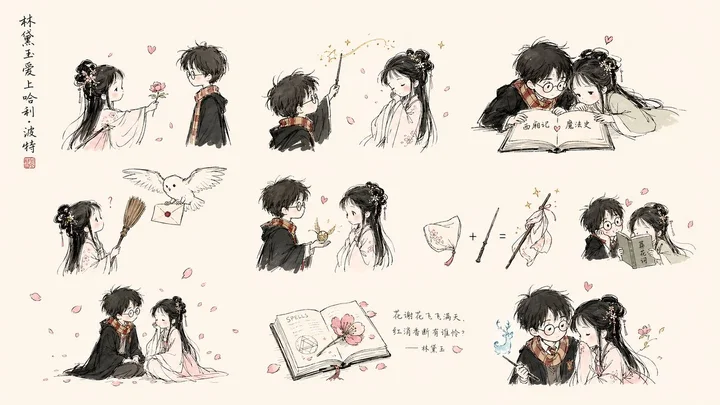
Build the theme as a constellation of self-contained narrative vignettes that also read as one emotional sequence. Reduce each scene to a single legible exchange—offering, approaching, looking back, following, helping, resting together, or completing a shared action—while theme-derived subjects take the roles of initiator, respondent, emotional token, and story prop. Progress from encounter through playful testing and reciprocal response toward intimacy, then close with one slightly larger tender scene or a compact handwritten coda. Arrange the vignettes on an airy implied modular grid with varied visual weights; pass the eye between them through alternating horizontal and diagonal gestures, gaze lines, and prop directions. Preserve broad fields of warm paper white as active pauses. Let tiny theme-shaped marks, drifting petal-like accents, short curling lines, and miniature objects occasionally cross the invisible module boundaries, linking the sequence without compromising the clear silhouette of each episode. Draw subjects and props in lively ink-sketch linework: fine black and gray contours with organic pressure changes and occasional dry-brush breaks, highly simplified facial features with unmistakable expressions, denser line clusters reserved for hair, folds, and the theme’s most identifying structures. Omit most body and environmental detail so posture, hands, eye direction, and object vectors carry the narrative. Anchor selected areas with loose dark ink masses on clothing or another theme-appropriate weight-bearing form, while pale forms retain generous paper white; the alternation of concentrated detail and open contour creates the breathing rhythm. Derive a restrained family of soft spot colors from the theme’s meaning: black ink establishes the structure, a pale emotional accent touches cheeks, edges, symbolic marks, and turning points, and one or two low-chroma supporting hues identify roles or props. Use minute warm-gold sparks and curling strokes only at moments of surprise. Apply color as thin translucent watercolor beneath the drawing, with softly released boundaries, keeping the value hierarchy predominantly ink and white. Treat lettering as a light narrative layer rather than a headline: use orthographically valid natural handwriting for the target writing system, with slender strokes, slight slant, modest size variation, and relaxed spacing. Place short theme-written phrases, small numerals, questions, or a brief coda beside the action they interpret, connecting them to theme-derived information carriers such as a fine rule, page, scroll, note, or small frame; keep the voice concise, playful, restrained, and sincere. Maintain an eye-level, nearly perspective-free paper-stage space, grounding each scene with only a short baseline, hem, or prop contact point. Allow the background to hold only theme symbols that advance the exchange. Balance cute proportional exaggeration, disciplined traditional ink sensitivity, and contemporary comic timing so the result feels spontaneously sketched yet precisely paced as an intimate illustrated story journal.
正在加载…

找回密码

输入注册邮箱,我们会发送一封重置邮件。

确认删除

删除后将从网站中移除。

API 迁移

导入 API 配置