会员账号

Open prompts

XXD Panel 004

12 real examples in the XXD Panel 004 · Urban Single-Line Journal style, with complete prompts available to copy without signing in.

Original style prompt

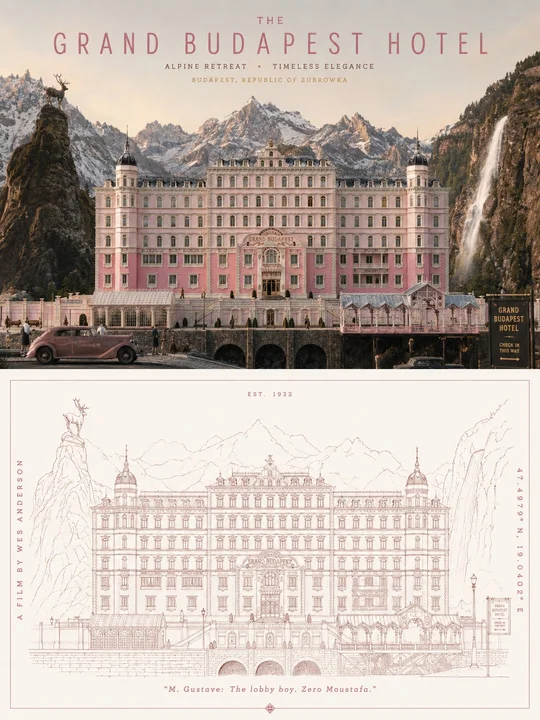
Based on the theme entered last, please create an **ultra-high-resolution, printable 3:4 vertical poster**. The whole uses a diptych structure of an upper and a lower zone, with the **upper and lower heights strictly 1:1, each taking up 50% of the frame**.

The **upper half** generates, from the theme, a complete, unified, real scene full of the feeling of daily life. If the theme is a city, first understand its core temperament, distill visual clues from its spatial landscape, street life, human customs, commercial atmosphere, culinary memory, local culture, historical layers, and everyday rhythm, and organize them naturally into a single real and vivid cross-section of the city rather than a scattered collage. If the theme is a specific street, block, landmark, commercial district, shop, building, or representative location, take the real spatial relationships as the core, accurately presenting the street structure, building frontages, shop signage, transport facilities, text systems, the state of the crowds, and the on-site atmosphere, preserving its most recognizable local characteristics. If the theme includes an address, coordinates, or reference images, understand the scene based on real information first; do not invent things out of thin air, do not arbitrarily substitute the location's features, and do not draw a generic landscape unrelated to the theme. Overall, avoid cheap tourist-promotion and postcard-style expression; instead capture a restrained, refined, real thematic moment with the warmth of daily life; people, buildings, streets, signboards, shop windows, facilities, and activities coexist naturally, and the landmark blends into the environment without exaggeration and without upstaging the whole.

The **lower half** extracts the **most recognizable subject, outline, structure, pose, and narrative relationships** from the upper half's image and reconstructs them into a **minimal linear graphic expression**. Do not trace details mechanically; instead re-express them through fine and accurate single lines, clear geometric perspective, restrained negative space, an orderly rhythm of detail, and moderately abstract summarized forms, retaining thematic features recognizable at a glance. If the theme leans toward a city or a place, you may extract its most crucial building skyline, street frontage, signage rhythm, transport facilities, shop-window relationships, or the state of the crowd; if the theme is not a city, you should likewise extract its most core identity features, outline language, structural relationships, and visual memory points, and convert them into a unified, concise, modern, high-end line-drawing poster language. A small number of geometric auxiliary elements, horizon lines, vertical compositional lines, or rhythmic negative space may be added, so that the lower half looks like a distillation and redesign of the real scene in the upper half.

The **text system** must blend naturally into the overall layout and continue this restrained, high-end, modern poster logic. Place a striking main title at the top; the subtitle may use the theme's original wording, the local language, country or regional information, an address, coordinates, a number, a year, or a brief line of explanation. If the image contains street text, signboards, or location information, it must be clear, natural, real, and professional, avoiding garbled characters, incorrect text, and careless spelling. The text layout should be concise and orderly, together with the image forming the completeness of a collectible travel poster and city brand visual, rather than an explanatory label pasted on carelessly afterward.

Color should not mechanically apply a fixed template; instead, first understand the theme's own climate, light, sense of time, building materials, historical air, commercial warmth, culinary impression, natural environment, and emotional texture, then distill a relationship between a dominant color and a ground color that **belongs exclusively to that theme**. The whole may adopt a monochrome-printing aesthetic or an extremely small amount of restrained color, forming rich variation through the density of lines, gradations of brightness, local weighting, the proportion of negative space, and the rhythm of detail, avoiding monotony and flatness. The final piece should present a poster effect of **clear lines, rich detail, unified style, quiet modernity, agile restraint, and high-end aesthetics**.
正在加载…

找回密码

输入注册邮箱,我们会发送一封重置邮件。

确认删除

删除后将从网站中移除。

API 迁移

导入 API 配置