

Open prompts
en sample 08 AI Image Prompt
en sample 08, its complete AI image prompt, and the XXD Panel 034 · Travel Stamp Marks style are free to view and copy.
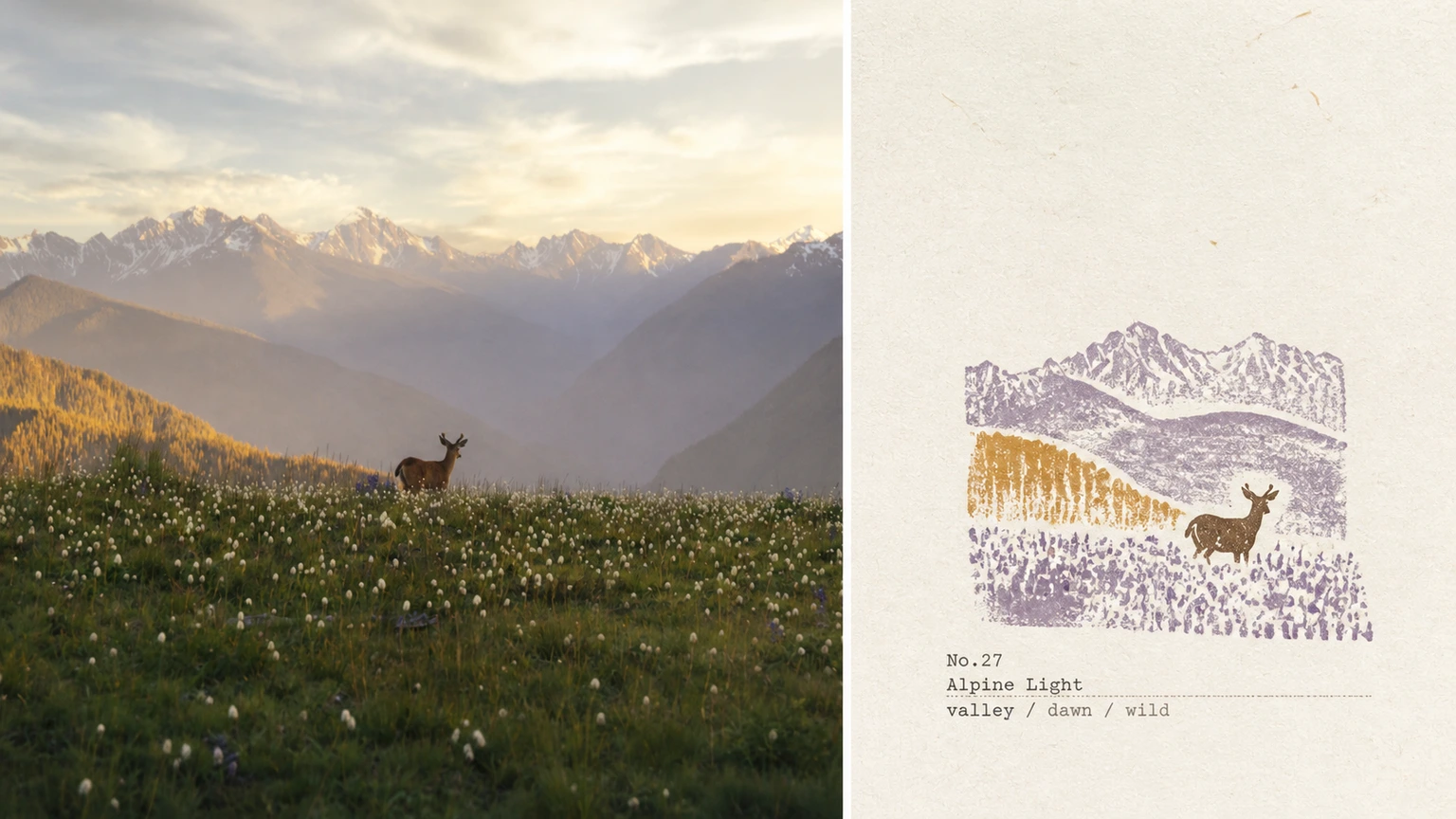
Complete AI image prompt
Please make every photo I upload into its own standalone high-end design poster; no multi-image collages, each photo output separately. The overall composition uses a 3:4 vertical format, with the upper and lower zones strictly 1:1 in height, each taking up 50% of the frame.

The upper half keeps the original photo, preserving the subject's structure, real texture, natural light and shadow, and original color atmosphere, applying only a slight high-end photographic color grade and delicate film grain so that it carries the texture of travel magazines, art publications, and field photography. To fit the frame, the environmental background may be extended or cropped naturally, but the subject must not be stretched, distorted, or altered.

The lower half extracts the most recognizable **subject, outline, pose, spatial relationships, and narrative features** from the photo and reconstructs them as a refined multicolor rubber-stamp image. Do not replicate the photo in full; instead, remove irrelevant details and retain only the structure, direction, and visual memory points that best represent the original subject, re-summarizing them through silhouettes, color patches, carved lines, and a small amount of layering so that the correspondence with the photo above can be recognized at a glance.

The composition maintains a relationship between a small-scale stamp impression and a large area of negative space. Position it freely according to the subject's own direction, proportions, and visual center of gravity; it may be off-center, touch the edge, or be partially cropped, but must maintain a clear hierarchy and editorial balance. Extract 2–4 of the most distinctive colors from the photo above and transform them into restrained yet spirited spot-color inks, using color registration relationships to establish layers, without using a fixed travel color palette.

The stamp impression retains the texture of genuine hand carving and stamping, including carved lines of uneven thickness, broken ink, paper showing through, granular ink, notched edges, pressure variations, and slight color-registration misalignment. Use warm, light-colored paper with subtle fiber texture for the background, avoiding smooth vectors, filter effects, and a children's craft feel.

The upper half keeps the original photo, preserving the subject's structure, real texture, natural light and shadow, and original color atmosphere, applying only a slight high-end photographic color grade and delicate film grain so that it carries the texture of travel magazines, art publications, and field photography. To fit the frame, the environmental background may be extended or cropped naturally, but the subject must not be stretched, distorted, or altered.

The lower half extracts the most recognizable **subject, outline, pose, spatial relationships, and narrative features** from the photo and reconstructs them as a refined multicolor rubber-stamp image. Do not replicate the photo in full; instead, remove irrelevant details and retain only the structure, direction, and visual memory points that best represent the original subject, re-summarizing them through silhouettes, color patches, carved lines, and a small amount of layering so that the correspondence with the photo above can be recognized at a glance.

The composition maintains a relationship between a small-scale stamp impression and a large area of negative space. Position it freely according to the subject's own direction, proportions, and visual center of gravity; it may be off-center, touch the edge, or be partially cropped, but must maintain a clear hierarchy and editorial balance. Extract 2–4 of the most distinctive colors from the photo above and transform them into restrained yet spirited spot-color inks, using color registration relationships to establish layers, without using a fixed travel color palette.

The stamp impression retains the texture of genuine hand carving and stamping, including carved lines of uneven thickness, broken ink, paper showing through, granular ink, notched edges, pressure variations, and slight color-registration misalignment. Use warm, light-colored paper with subtle fiber texture for the background, avoiding smooth vectors, filter effects, and a children's craft feel.

The text resembles **field annotations** left by a traveler or observer. From the photo's location, subject, state, or imagery, distill a short title in the target language specified by the user, accompanied by a No. number, 2–3 keywords, or an extremely brief description. Use a small typewriter font or archival microtypography, cleverly aligning it with the stamp impression's edge, negative space, baseline, or partial contour, so that the text becomes part of the recording system rather than a commercial headline.

The overall presentation creates a visual relationship of **real photography × handmade rubber stamp × travel field notes** that is quiet, restrained, unadorned, refined, and collectible. The photo records the scene, while the stamp impression preserves the part most worth recognizing in memory. Avoid a tourist-souvenir feel, postage-stamp templates, circular seals, sticker collages, cartoon style, excessive text, and accumulated decoration.

The text resembles **field annotations** left by a traveler or observer. From the photo's location, subject, state, or imagery, distill a short title in the target language specified by the user, accompanied by a No. number, 2–3 keywords, or an extremely brief description. Use a small typewriter font or archival microtypography, cleverly aligning it with the stamp impression's edge, negative space, baseline, or partial contour, so that the text becomes part of the recording system rather than a commercial headline.

The overall presentation creates a visual relationship of **real photography × handmade rubber stamp × travel field notes** that is quiet, restrained, unadorned, refined, and collectible. The photo records the scene, while the stamp impression preserves the part most worth recognizing in memory. Avoid a tourist-souvenir feel, postage-stamp templates, circular seals, sticker collages, cartoon style, excessive text, and accumulated decoration.
Original style prompt
Please make every photo I upload into its own standalone high-end design poster; no multi-image collages, each photo output separately. The overall composition uses a 3:4 vertical format, with the upper and lower zones strictly 1:1 in height, each taking up 50% of the frame.

The upper half keeps the original photo, preserving the subject's structure, real texture, natural light and shadow, and original color atmosphere, applying only a slight high-end photographic color grade and delicate film grain so that it carries the texture of travel magazines, art publications, and field photography. To fit the frame, the environmental background may be extended or cropped naturally, but the subject must not be stretched, distorted, or altered.

The lower half extracts the most recognizable **subject, outline, pose, spatial relationships, and narrative features** from the photo and reconstructs them as a refined multicolor rubber-stamp image. Do not replicate the photo in full; instead, remove irrelevant details and retain only the structure, direction, and visual memory points that best represent the original subject, re-summarizing them through silhouettes, color patches, carved lines, and a small amount of layering so that the correspondence with the photo above can be recognized at a glance.

The composition maintains a relationship between a small-scale stamp impression and a large area of negative space. Position it freely according to the subject's own direction, proportions, and visual center of gravity; it may be off-center, touch the edge, or be partially cropped, but must maintain a clear hierarchy and editorial balance. Extract 2–4 of the most distinctive colors from the photo above and transform them into restrained yet spirited spot-color inks, using color registration relationships to establish layers, without using a fixed travel color palette.

The stamp impression retains the texture of genuine hand carving and stamping, including carved lines of uneven thickness, broken ink, paper showing through, granular ink, notched edges, pressure variations, and slight color-registration misalignment. Use warm, light-colored paper with subtle fiber texture for the background, avoiding smooth vectors, filter effects, and a children's craft feel.

The upper half keeps the original photo, preserving the subject's structure, real texture, natural light and shadow, and original color atmosphere, applying only a slight high-end photographic color grade and delicate film grain so that it carries the texture of travel magazines, art publications, and field photography. To fit the frame, the environmental background may be extended or cropped naturally, but the subject must not be stretched, distorted, or altered.

The lower half extracts the most recognizable **subject, outline, pose, spatial relationships, and narrative features** from the photo and reconstructs them as a refined multicolor rubber-stamp image. Do not replicate the photo in full; instead, remove irrelevant details and retain only the structure, direction, and visual memory points that best represent the original subject, re-summarizing them through silhouettes, color patches, carved lines, and a small amount of layering so that the correspondence with the photo above can be recognized at a glance.

The composition maintains a relationship between a small-scale stamp impression and a large area of negative space. Position it freely according to the subject's own direction, proportions, and visual center of gravity; it may be off-center, touch the edge, or be partially cropped, but must maintain a clear hierarchy and editorial balance. Extract 2–4 of the most distinctive colors from the photo above and transform them into restrained yet spirited spot-color inks, using color registration relationships to establish layers, without using a fixed travel color palette.

The stamp impression retains the texture of genuine hand carving and stamping, including carved lines of uneven thickness, broken ink, paper showing through, granular ink, notched edges, pressure variations, and slight color-registration misalignment. Use warm, light-colored paper with subtle fiber texture for the background, avoiding smooth vectors, filter effects, and a children's craft feel.

The text resembles **field annotations** left by a traveler or observer. From the photo's location, subject, state, or imagery, distill a short title in the target language specified by the user, accompanied by a No. number, 2–3 keywords, or an extremely brief description. Use a small typewriter font or archival microtypography, cleverly aligning it with the stamp impression's edge, negative space, baseline, or partial contour, so that the text becomes part of the recording system rather than a commercial headline.

The overall presentation creates a visual relationship of **real photography × handmade rubber stamp × travel field notes** that is quiet, restrained, unadorned, refined, and collectible. The photo records the scene, while the stamp impression preserves the part most worth recognizing in memory. Avoid a tourist-souvenir feel, postage-stamp templates, circular seals, sticker collages, cartoon style, excessive text, and accumulated decoration.

The text resembles **field annotations** left by a traveler or observer. From the photo's location, subject, state, or imagery, distill a short title in the target language specified by the user, accompanied by a No. number, 2–3 keywords, or an extremely brief description. Use a small typewriter font or archival microtypography, cleverly aligning it with the stamp impression's edge, negative space, baseline, or partial contour, so that the text becomes part of the recording system rather than a commercial headline.

The overall presentation creates a visual relationship of **real photography × handmade rubber stamp × travel field notes** that is quiet, restrained, unadorned, refined, and collectible. The photo records the scene, while the stamp impression preserves the part most worth recognizing in memory. Avoid a tourist-souvenir feel, postage-stamp templates, circular seals, sticker collages, cartoon style, excessive text, and accumulated decoration.
More open images in the “XXD Panel 034 · Travel Stamp Marks” style