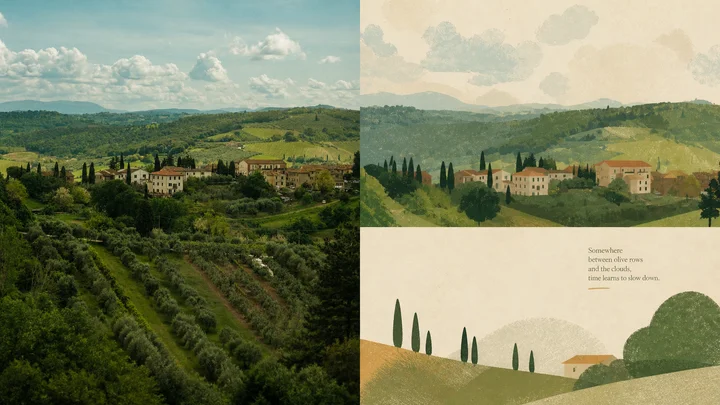
 en sample 05XXD Panel 080 · Organic Gouache Field
prompt library
成员提示词库
-
套提示词风格
- 全量解锁提示词、参数与案例
- 持续上新新提示词与实用场景
- 作者答疑使用问题直接沟通
正在确认当前可用的年度方案…
zhishixingqiu
知识星球
扫码加入星球,持续获取提示词更新、插件资料和项目答疑;星球会员也可以解锁成员提示词库。
 扫码或点击加入知识星球
认识小小东
添加微信,获取提示词、插件、Skills 与 AI 出图支持

扫描,添加小小东个人微信
built by xiaoxiaodong
我开发的项目
谷歌插件和 GitHub 项目分开展示
16 个可用项目chrome web store
谷歌插件
github
GitHub 项目
正在计算符合当前颜色的内容…
你已看完 10 页免费内容
开通 VIP,解锁完整提示词库。
开源 Skills
Skills
浏览小小东开源的 Codex / Agent Skills。按现有瀑布流节奏展开,找到合适的能力后即可复制安装命令。
正在加载 Skills…
没有找到匹配的 Skill。
Open prompts
XXD Panel 080
8 real examples in the XXD Panel 080 · Organic Gouache Field style, with complete prompts available to copy without signing in.
Original style prompt
Please turn every photograph I upload into a separate high-end design poster. Do not create a multi-image collage; output each photograph independently. Use an overall 3:4 portrait composition with upper and lower regions in a strict 1:1 height ratio, each occupying 50% of the canvas.

Retain the original photograph in the upper half, preserving the subject's identity, structure, pose, authentic texture, natural light and shadow, and original colour atmosphere. Apply only subtle, refined colour grading so that it has the quality of an art magazine, independent publication, or exhibition image. The surrounding environment may be extended naturally to fit the format, but the subject must not be stretched, distorted, or altered.

In the lower half, extract the photograph's most recognisable **subject, contour, structure, pose, and narrative relationship**, while also understanding the image's true **core theme, emotion, and latent metaphor**, then reconstruct it through selective memory. Do not mechanically replicate the photograph or merely decorate its surface. Retain only a few visual clues that best represent the spirit of this photograph, letting the subject, environment, and one symbolic detail carry the narrative together, so that the original is immediately recognisable while its distilled emotional expression can also be felt.

Use **digital gouache / digital crayon brushes + flat colour fields + granular noise texture**. Summarise the subject through flexible organic geometry, broad silhouettes, and unoutlined colour shapes, weakening realistic perspective and naturalistic light and shadow. Add only a very small amount of hand-drawn line, crayon trace, and granular gouache texture in selected areas, so the forms remain concise while retaining the warmth of genuine handwork. Actively remove complex backgrounds, trivial structures, and meaningless detail.

The composition should emphasise **generous whitespace and emotional space**. The subject need not fill the canvas; it may be reduced in scale, offset, locally cropped, or placed in isolation. Use differences in scale, a sense of distance, positive and negative form, density and openness, and directional relationships to reshape the source's genuine quietness, solitude, warmth, ease, anticipation, freedom, or other emotion. Whitespace is not an absence: it actively carries air, time, distance, silence, and imagination, creating the poetry that “what is not drawn matters just as much.”

Find one subtle **visual metaphor** within the source photograph: for example, plant growth may represent vitality, a small distant object may represent distance, repeated forms may represent rhythm, an isolated subject may represent quietness, a path may represent moving forward, and occlusion or whitespace may represent memory and absence. The metaphor must arise naturally from the source. Do not force a new story onto it or accumulate symbolic signs.

Use a **low-saturation botanical colour logic**, remixed from the upper photograph's overall colour temperature and characteristic hues. Let sage green and olive green form the principal base, supported by creamy yellow, grey-blue, and soft neutrals, with small areas of coral pink, apricot orange, mustard yellow, or other warm colours brightening the emotion. The whole should feel gentle, natural, and restorative, but never dim or lifeless. Preserve a measured yet distinct vitality of colour, building emotion through warm–cool relationships, area, and value rather than relying on gradients and realistic lighting.

Use text sparingly, without presetting a fixed title, place, number, or language. Freely distil a small number of genuinely meaningful words or short phrases from the photograph's theme, action, memory, emotion, or metaphor, and let them form a natural image–text relationship with the subject, colour fields, and generous whitespace. Keep the typography light, small, restrained, and breathable. It should not explain the image, but feel like a line of observation or an emotional footnote left in an independent publication.

The overall result should unite **flexible organic geometry, digital gouache, granular texture, a botanical palette, core narrative, distilled metaphor, generous whitespace, and emotional reconstruction** into a sophisticated visual character: quiet, natural, perceptive, gentle, relaxed, and alive, with mature compositional awareness and the sensibility of art publishing. Avoid mere botanical decoration, filled backgrounds, accumulated detail, meaningless symbols, cartoon styling, polished vectors, 3D rendering, and template-like commercial illustration.
en sample 05XXD Panel 080 · Organic Gouache Field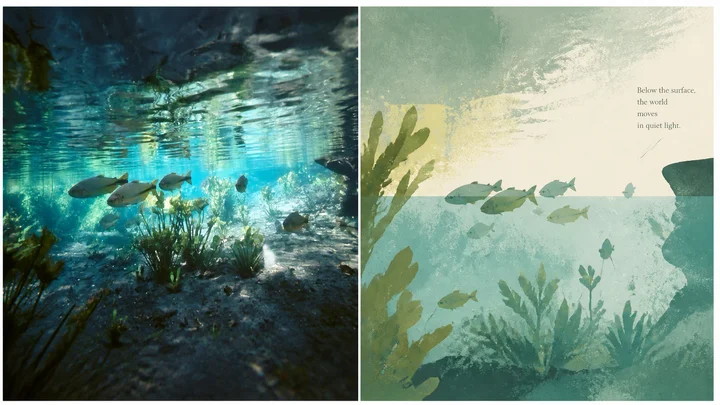 en sample 06XXD Panel 080 · Organic Gouache Field
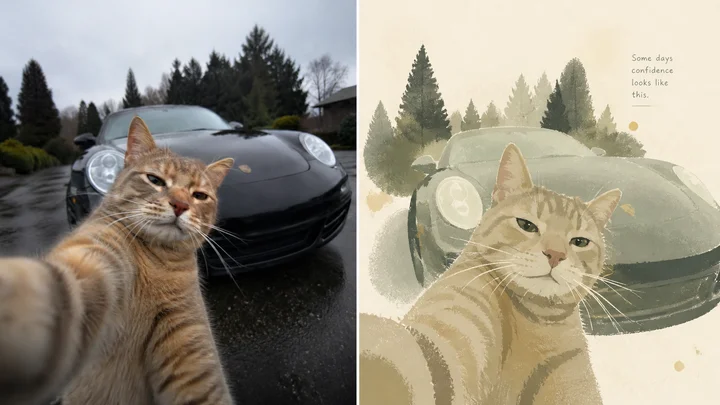 en sample 07XXD Panel 080 · Organic Gouache Field
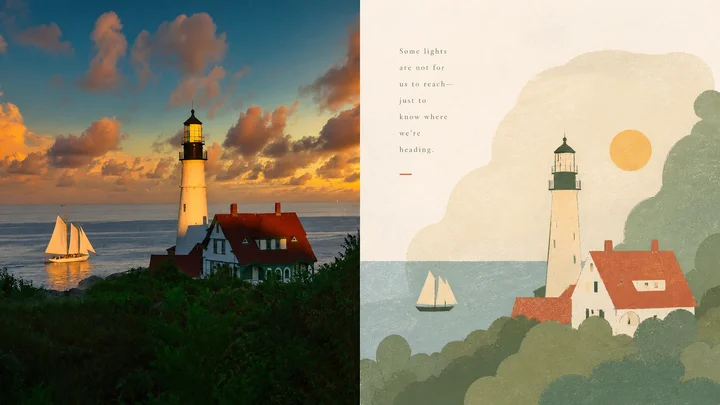 en sample 08XXD Panel 080 · Organic Gouache Field
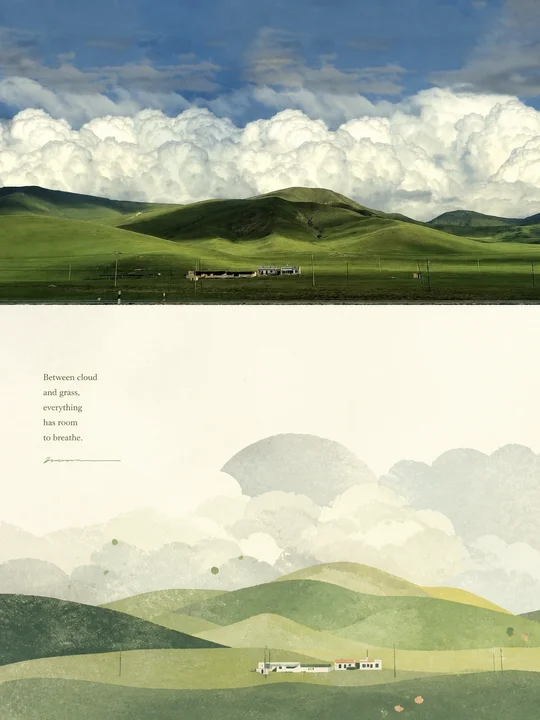 en sample 09XXD Panel 080 · Organic Gouache Field
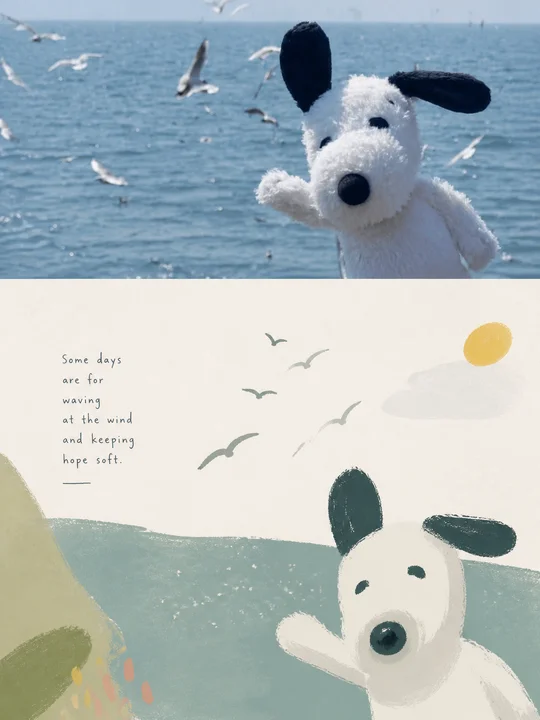 en sample 10XXD Panel 080 · Organic Gouache Field
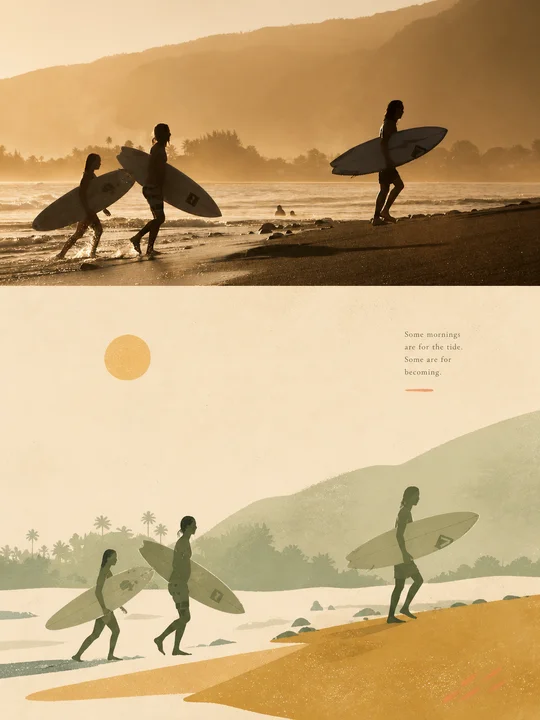 en sample 11XXD Panel 080 · Organic Gouache Field
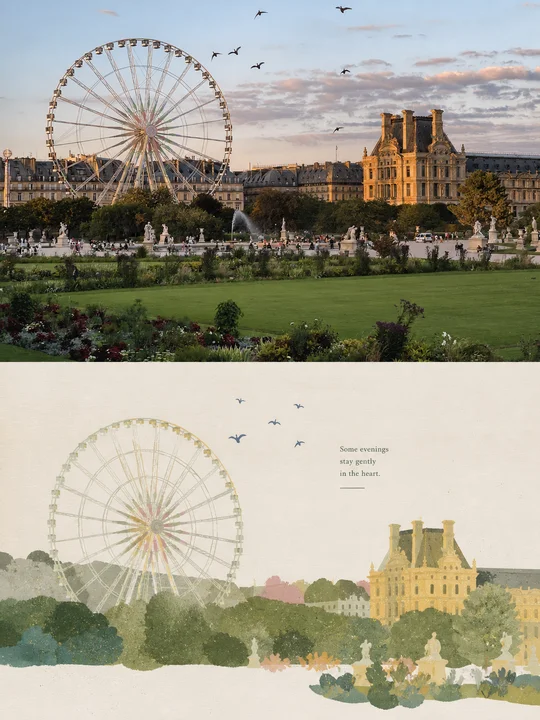 en sample 12XXD Panel 080 · Organic Gouache Field
正在计算符合当前颜色的内容…
VIP 收录全部风格 每周持续新增,开源的只是其中一小部分。
还没有通知
有新通知时会出现在这里。
批量管理
正在建设中,预计一周后内上线。
已选 0 组
点击卡片选择或取消,删除后无法恢复