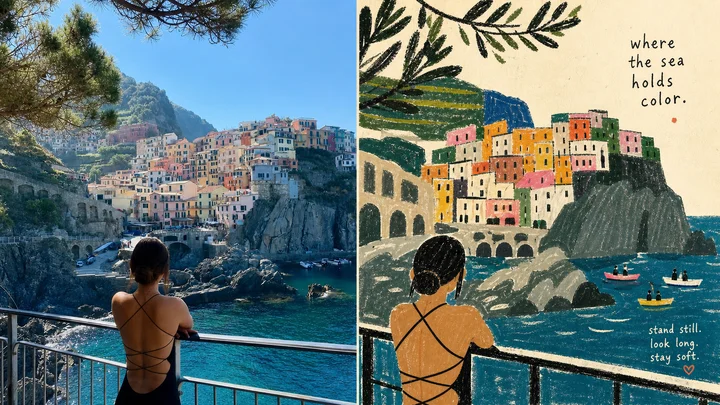
 en sample 05XXD Panel 100 · Folk-Craft Narrative Painting
prompt library
成员提示词库
-
套提示词风格
- 全量解锁提示词、参数与案例
- 持续上新新提示词与实用场景
- 作者答疑使用问题直接沟通
正在确认当前可用的年度方案…
zhishixingqiu
知识星球
扫码加入星球,持续获取提示词更新、插件资料和项目答疑;星球会员也可以解锁成员提示词库。
 扫码或点击加入知识星球
认识小小东
添加微信,获取提示词、插件、Skills 与 AI 出图支持

扫描,添加小小东个人微信
built by xiaoxiaodong
我开发的项目
谷歌插件和 GitHub 项目分开展示
16 个可用项目chrome web store
谷歌插件
github
GitHub 项目
正在计算符合当前颜色的内容…
你已看完 10 页免费内容
开通 VIP,解锁完整提示词库。
开源 Skills
Skills
浏览小小东开源的 Codex / Agent Skills。按现有瀑布流节奏展开,找到合适的能力后即可复制安装命令。
正在加载 Skills…
没有找到匹配的 Skill。
Open prompts
XXD Panel 100
8 real examples in the XXD Panel 100 · Folk-Craft Narrative Painting style, with complete prompts available to copy without signing in.
Original style prompt
Create one independent premium design poster for each uploaded photograph, with no multi-photo collage. Use a 3:4 portrait composition with upper and lower regions of exactly equal height, each 50% of the canvas.

Preserve the original photograph above: subject identity, structure, pose, real texture, natural light and original colour atmosphere. Apply only subtle high-end grading for an art-magazine, independent-publication and exhibition-image quality. Extend the environment naturally if needed, but never stretch, distort or change the subject.

In the lower half extract the most recognisable **subject, silhouette, pose and narrative relationship**, rebuilding them as a **Naïve folk-inspired narrative illustration: a tactile flat narrative image with folk-art simplicity**. Do not fully depict the photograph. Remove detail deliberately and retell it with silhouettes, primitive forms, a few colour blocks and pictographic elements, keeping only clues that preserve identity and story so the source is immediately recognisable yet humble, humorous and full of everyday life.

Use **simplified silhouettes and large primitive forms**. People, animals, buildings, plants, objects and vehicles may be compressed, summarised and exaggerated without strict perspective or anatomy. Use flattened perspective, with height, overlap, scale and colour-block relationships carrying the narrative. Distribute supporting objects rhythmically as visual symbols, delete complex backgrounds, and let one key action, relationship or scene carry the story.

Use **the grain of crayon, oil pastel, coarse pencil and dry media**. Dark areas must retain rubbing, friction, layering, breaks and paper showing through rather than uniform fills. Keep hand-made error and awkwardness in the contours. Keep the image flat; avoid realistic lighting, metallic materials, complex volume and smooth digital vectors.

Reorganise **the photograph's most vivid, memorable colours** into a clear limited palette. Use warm-white paper and dark silhouettes as the base, then derive only a few blue, red, yellow, green, pink or orange spot accents from the source for clothing, plants, food, architecture or narrative focus. Keep colours bright but not oversaturated; avoid muddy, gloomy, Morandi, fluorescent and cheap candy colours.

Prioritise **narrative centre, visual weight, positive and negative shapes, scale rhythm and whitespace**. The subject may be offset, cropped or arranged in a loose triangle. Leave breathing room. Make the structure clear from afar and reveal hand-made grain and naïve wit up close.

Use very little text. Do not preset a title, place, number or language. Derive meaningful words from the subject, action, daily state, emotion or cultural context. Use **light folk-editorial lettering with slight hand-printing misregistration and irregular spacing**, optionally with handwriting, so words feel like a sign, menu, note or publication annotation integrated into the scene, never a neat commercial title bar.

The result combines **naïve silhouettes, flat space, crayon grain, limited colour, folk symbols and editorial narrative**: friendly, humorous, plain, intelligent and alive, with mature design judgement. Avoid children’s cartoons, cute stickers, realistic illustration, smooth vectors, complex perspective, detailed faces, excessive detail, 3D, e-commerce illustration and template effects.
en sample 05XXD Panel 100 · Folk-Craft Narrative Painting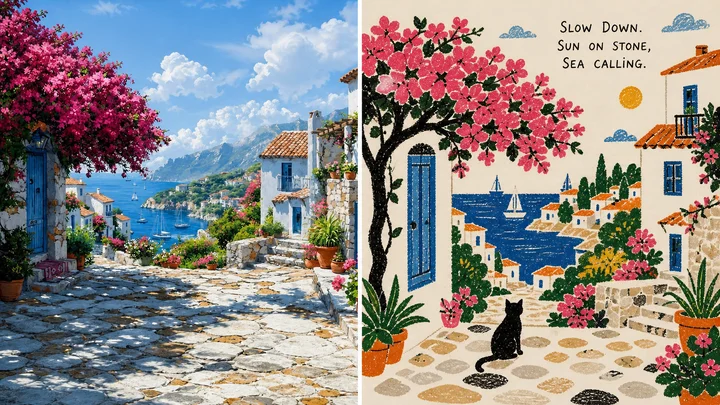 en sample 06XXD Panel 100 · Folk-Craft Narrative Painting
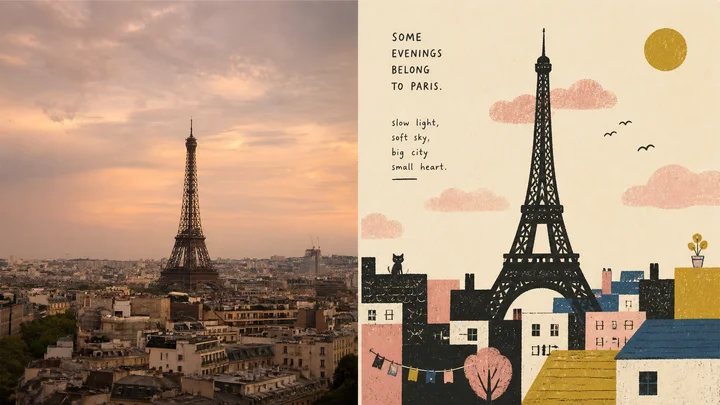 en sample 07XXD Panel 100 · Folk-Craft Narrative Painting
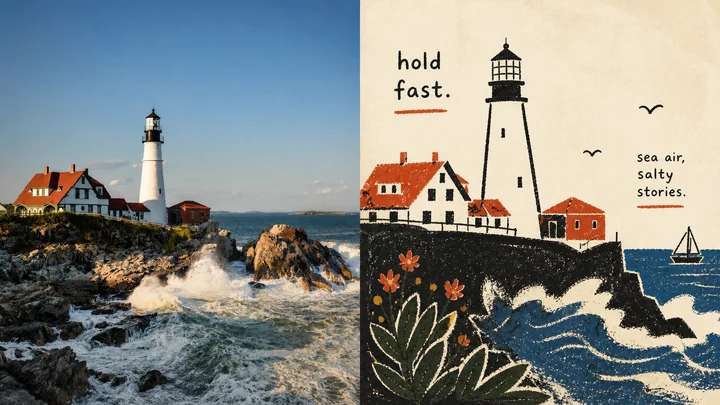 en sample 08XXD Panel 100 · Folk-Craft Narrative Painting
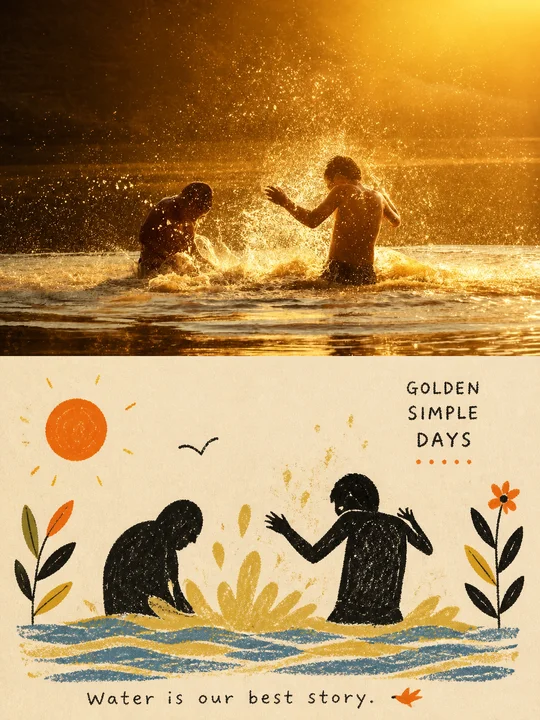 en sample 09XXD Panel 100 · Folk-Craft Narrative Painting
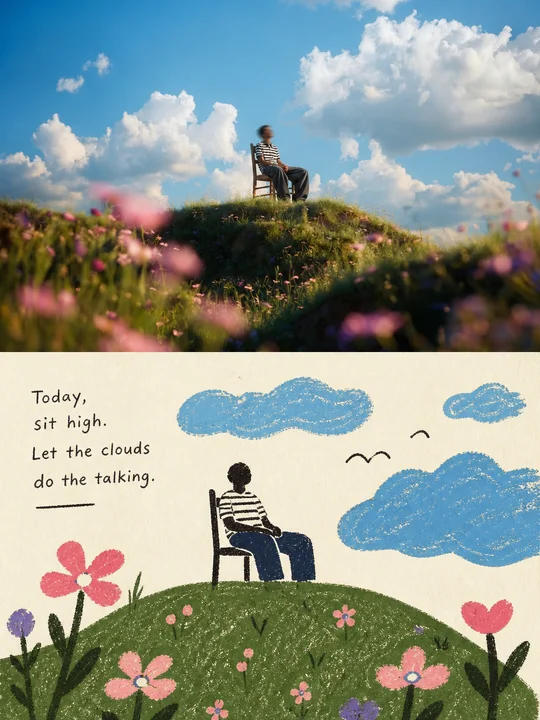 en sample 10XXD Panel 100 · Folk-Craft Narrative Painting
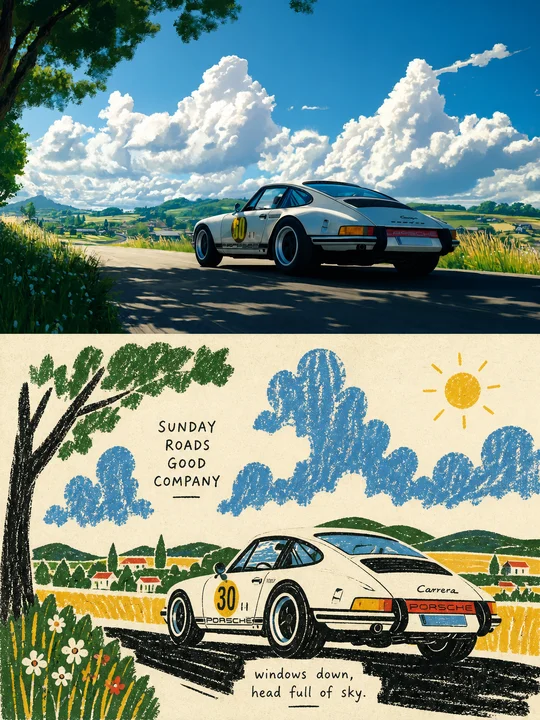 en sample 11XXD Panel 100 · Folk-Craft Narrative Painting
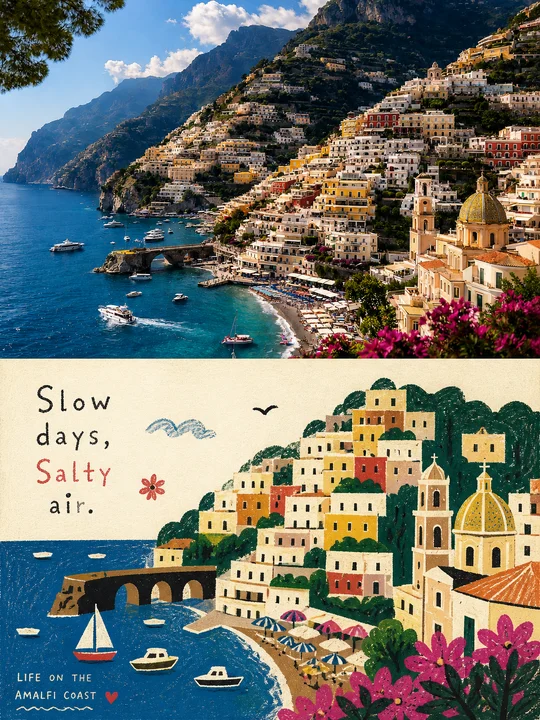 en sample 12XXD Panel 100 · Folk-Craft Narrative Painting
正在计算符合当前颜色的内容…
VIP 收录全部风格 每周持续新增,开源的只是其中一小部分。
还没有通知
有新通知时会出现在这里。
批量管理
正在建设中,预计一周后内上线。
已选 0 组
点击卡片选择或取消,删除后无法恢复